
Do you know Garlicin ? and do you know how to use Garlicin in aquatic feed ? what is its function ? Look here, the article will tell all details .
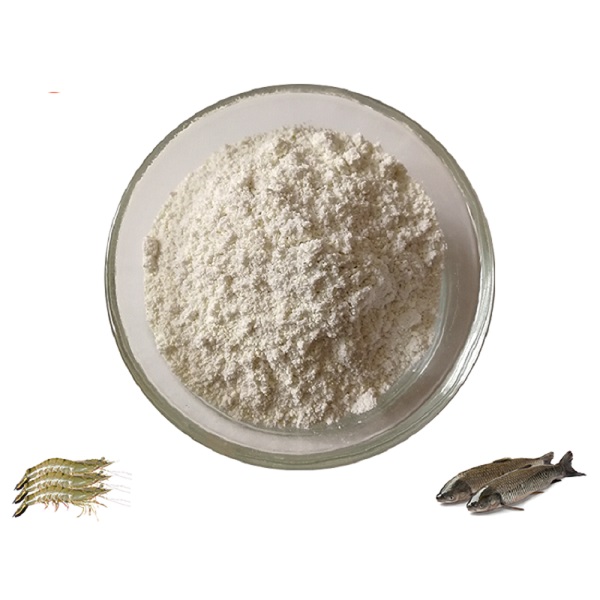
The application of garlicin in aquaculture is now well established. It combines attractant, growth promotion, broad-spectrum antibacterial, and immune enhancement properties – with no residue and low risk of drug resistance – making it an ideal green feed additive for aquatic species.
Garlicin is suitable for almost all major aquaculture species, including fish, shrimp, crabs, shellfish, and sea cucumbers. Our product is garlicin powder with customizable active ingredient content.
Core Functions & Mechanisms of Action
1. Attractant & Growth Promotion
Garlicin has a unique garlic aroma that strongly stimulates the olfactory and taste senses of aquatic animals, significantly increasing feed intake. It also promotes intestinal peristalsis and digestive enzyme secretion.
Research Data:
- In sea cucumber (Apostichopus japonicus), the group with 3% garlicin addition showed more than double the feeding behavior (50.50 times vs. 24.38 times) compared to the control group, with significantly improved weight gain.
- In ivory shell snail (Babylonia areolata), the highest specific growth rate (SGR) of 2.18–2.20%/day was achieved when garlicin was added at 0.75%–0.90% of the feed.
2. Broad-Spectrum Antibacterial & Disease Control
Garlicin has bactericidal effects against a wide range of Gram-negative and Gram-positive bacteria, making it an effective alternative to antibiotic growth promoters.
Application Methods:
- Feed addition – mixed directly into feed
- Medicated bath – soaking diseased fish in garlicin solution
- Pond spraying – applying diluted garlicin throughout the pond
Practical Example: For fish with enteritis, mix 10–15g of garlicin powder per 100kg of fish daily, and feed continuously for 3–5 days. Good results have been reported.
3. Immune Enhancement & Antioxidant Capacity
Garlicin increases the activity of antioxidant enzymes (such as SOD and CAT) and lysozyme levels, while reducing the content of oxidative damage products such as malondialdehyde (MDA).
Research Data:
- In ivory shell snail, garlicin effectively improved total antioxidant capacity (T-AOC) and superoxide dismutase (SOD) activity.
- In sea cucumber, adding 100 mg/kg of garlicin to feed effectively improved growth performance.
Recommended Dosage & Precautions
Recommended Dosage
| Application | Dosage (25% garlicin powder) |
|---|---|
| General aquatic feed | 100 – 150 g per ton of feed |
| Feed with high meat/bone meal content | Up to 200 g per ton of feed |
| Fish, shrimp, crab feed | 50 – 100 g per ton of feed |
Key Precautions
- Heat sensitivity: Garlicin is unstable when exposed to heat and may lose efficacy within 2 days. It must be stored in sealed containers in a cool, dark place.
- Strict dosage control: Overdose can be toxic. For example, adding 800 mg/kg garlicin to eel feed reportedly caused 100% mortality within a short period.
There are two typies garlicin in market, one is natrual allicin ,another is chemical systhesis . how to choose ?
Synthetic Garlicin vs. Natural Garlicin – Key Differences
The core difference between synthetic and natural garlicin is that natural garlicin is a complex mixture extracted from garlic containing multiple active compounds, while synthetic garlicin is chemically produced to mimic only a few major components, resulting in a relatively simpler composition.
Comparison Table
| Aspect | Synthetic Garlicin | Natural Garlicin (Garlic Extract) |
|---|---|---|
| Source & Composition | Synthesized from chemical raw materials (e.g., allyl chloride). Main components are a few allyl sulfide compounds such as diallyl trisulfide (DATS) and diallyl disulfide (DADS). | Extracted from garlic bulbs. Contains multiple sulfide compounds including DATS, DADS, diallyl sulfide, and trace amounts of undecomposed allicin. It is a complex mixture. |
| Purity & Content | High purity of active ingredients. DATS content typically 50-80%, DADS 20-50%, total content >92%. Very strong, pungent garlic odor. | Contains multiple components. Natural garlic oil typically contains around 40% DATS and 17% DADS, along with more than ten other organic sulfur compounds such as methyl allyl disulfide. |
| Cost & Price | High production yield (85-90%) – hundreds of times higher than natural extraction. Therefore, cost is low and market price is highly competitive. | Yield is only 0.1-0.2% of dry garlic material. Extraction cost is extremely high, making it expensive. |
| Functional Characteristics | Single components at high concentrations. Specific effects (e.g., strong attractant odor) may be more pronounced, but lacking the synergistic effects of multiple natural active substances. | Multiple active ingredients work together – may offer synergistic effects. Research suggests that at equal molar concentrations, natural products may have superior antibacterial effects compared to pure synthetic compounds. |
How to Choose for Aquaculture?
Choosing between synthetic and natural garlicin is essentially a trade-off between cost and effectiveness.
Synthetic Garlicin – The Cost-Effective Choice
- Market reality: The vast majority of commercial garlicin products used in aquaculture today are synthetic.
- Advantages: The core value lies in its low cost and proven efficacy. When used at recommended dosages, its effects on attractant, growth promotion, and antibacterial activity are well documented.
- Risks: Due to its single-component nature and "super-strong" odor, excessive addition (e.g., >100 ppm) may cause feed refusal in fish and shrimp. Additionally, trace impurities from synthesis (e.g., allyl chloride) may remain, and long-term feeding may impart a garlic odor to the final aquatic product.
Natural Garlicin – Pursuing "Synergistic Effects"
- Advantages: Although expensive, it more closely resembles the full spectrum of natural garlic activity. Multiple components work synergistically to deliver better combined effects in attractant, antibacterial, and antioxidant functions.
- Applications: Typically used in premium feed formulations or for products with specific quality requirements.
Practical Recommendations
In summary:
- Synthetic garlicin has a strong, intense odor and requires strict dosage control.
- Natural garlicin is more gentle and complex, but comes with a much higher cost.
For most aquaculture applications, synthetic garlicin remains the mainstream choice due to its excellent cost-effectiveness. The key is to choose a product from a reputable manufacturer, ensure the active ingredient content meets specifications, and strictly follow recommended dosage guidelines (typically 50-100 grams per ton of feed for fish, shrimp, and crab) – avoiding overdose
Key Precautions
- Heat sensitivity: Garlicin is unstable when exposed to heat – it can lose efficacy within 2 days. Store in sealed containers in a cool, dark place.
- Strict dosage control: Overdose can be toxic. For example, adding 800 mg/kg to eel feed resulted in 100% mortality in one reported case.
- Quality matters: Choose products from certified manufacturers with clear specification of active ingredients (e.g., DATS content).
Post time: Jul-31-2026


